
Cycling Science Digest ·
Endurance at the top of Zone 2 is a waste of effort
Listen to this issue as a podcast
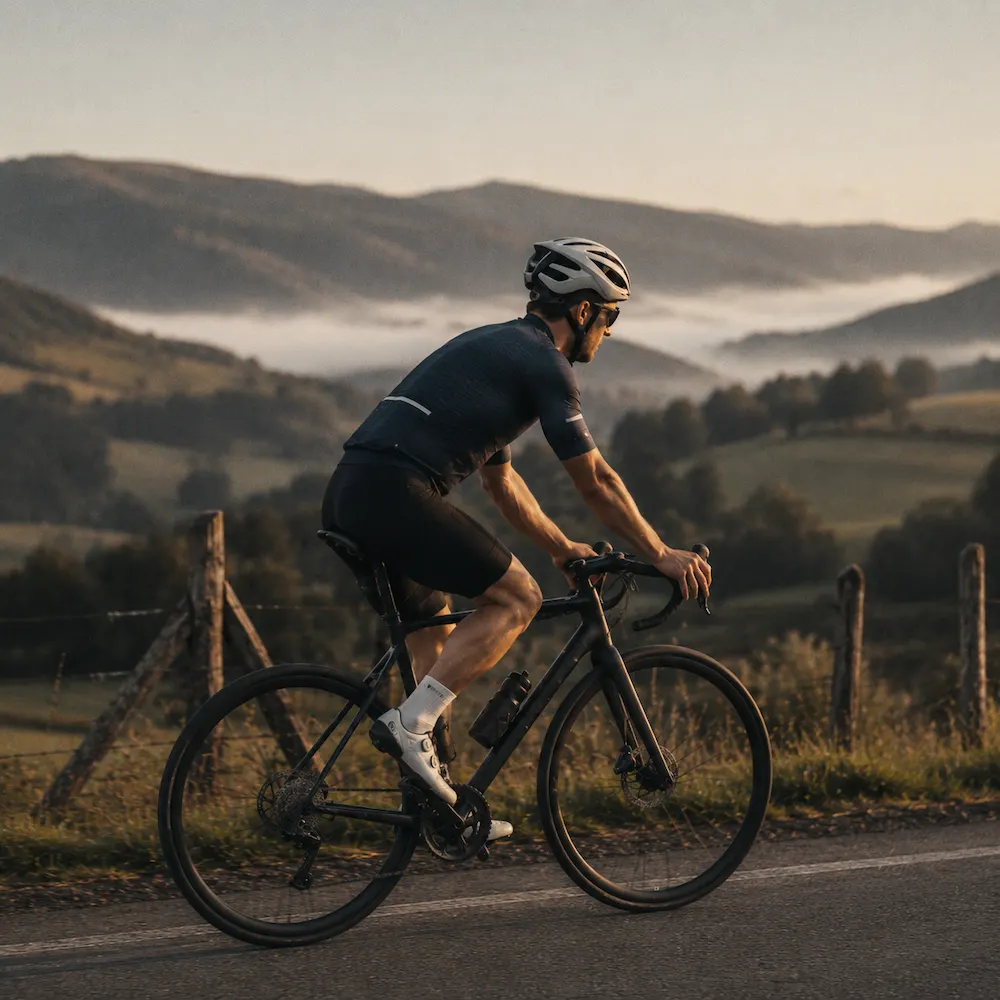
Most riders think their endurance rides are the easy part of the week. The truth is a lot of you are quietly riding them too hard.
You know the feeling. You are out for a steady aerobic ride, meant to be comfortable, and you find yourself creeping up to the very top of the zone. Not quite tempo, but not really easy either. Sitting right on the ceiling of your endurance range because it feels productive, and because backing off feels like leaving something on the table.
A new study suggests you probably are leaving nothing on the table. You are just paying more for the same result.
Guimaraes and colleagues took twenty trained amateur runners and split them into two groups for six weeks of training, matched for total volume. One group trained their aerobic work right at the upper edge of the moderate domain, effectively the top of Zone 2, near the first threshold. The other group did the same sessions ten to fifteen per cent easier, comfortably below that line. Everything else was equal. Same volume, same structure, same tests before and after.
The result is the interesting bit. Both groups improved, and they improved by the same amount. Jump performance went up in both. Critical speed, which is a good marker of sustainable aerobic performance, went up in both. There was no meaningful difference between training at the top of the zone and training clearly below it. The gains were the same.
But the cost was not. The group riding at the top of the zone carried more mechanical stress and reported higher strain through the block. Same adaptation, more wear. The easier group got everything the harder group got, and turned up fresher for it.
Yes, this was runners, not cyclists, and running loads the body differently. But the principle is about training intensity, not impact, and it lines up with what I see in cycling power files constantly. Riders grinding the top of their endurance zone all week, accumulating fatigue they do not need, then wondering why the quality days feel flat and why they fade in the back half of long events.
Here is the mechanism in plain terms. The aerobic adaptations you are chasing on an endurance ride, more mitochondria, better fat use, a bigger engine, come mostly from time and volume, not from riding that time as hard as you can get away with. Push the intensity up and you do not get more of the adaptation. You get more fatigue for the same adaptation. That fatigue is not free. It comes out of the sessions that actually need it, and out of your durability late in long rides.
One honest caveat. This does not mean easier is always better. The study still had the riders doing real aerobic work, and it still included harder sessions in the week. This is not a licence to soft-pedal everything. It is a specific point about the endurance rides. Keep them genuinely endurance, and spend the hard currency of fatigue where it pays.
What to do with this
If your time is capped. You might be tempted to make every ride count by pushing the intensity. Resist it. The study is a reminder that harder is not the same as better. When time is short, keeping your aerobic rides truly easy is what lets you go genuinely hard on the one or two days that actually move the needle. Spread the intensity across everything and you get a blurry middle that improves nothing quickly.
If you are over 50. This matters more with every year. Recovery slows as you age, so the fatigue you pick up grinding the top of the zone hangs around longer and costs you more. The aerobic gain is the same as a younger rider's, but the price is higher and takes longer to clear. Easing your endurance rides is not going soft. It is protecting the recovery and consistency that your training now depends on, and it keeps you able to hit the hard days that still make you faster.
If you are chasing performance and a new race. Protect the gap between your easy and your hard. If your endurance rides are creeping up to the top of the zone, you are blunting the contrast that makes the hard days work. Pull the easy rides down a notch. You will not lose the aerobic gain, and you will arrive at your key sessions fresh enough to actually hit them, which is where the result you are chasing gets built.
The takeaway is simple. On your endurance days, easier is not lazy. It is often the smarter version of the same session. Save the cost of fatigue for where it actually buys you performance.
Guimaraes MP, Foresti YF, Papoti M, de Azevedo PHSM. (2026). Neuromuscular adaptations, performance, and monitoring of endurance training within moderate domain intensities. Journal of Strength and Conditioning Research, published ahead of print.
On my mindIf you do not know, ask
I had a call this week with a triathlete who has just come on board, and it reminded me of something simple that I think matters more than most training advice.
If you do not know, ask. If you are getting confused, clarify.
That sounds almost too obvious to write down. But watch what people actually do. There is more information about training out there than any of us could read in a lifetime. Threshold this, zone that, a new protocol every week, a hundred confident voices all saying slightly different things. And faced with all of it, most riders do not ask a question. They pick a direction that sounds right and start pedalling down it, sometimes for months, before they realise it was never the right road for them.
The problem is not a lack of information. It is the opposite. There is so much of it that you genuinely cannot tell what applies to you. A study on elite runners, a protocol built for a twenty-five year old with unlimited time, a tip that works brilliantly for someone with a completely different limiter than yours. All true, all useless to you, and no way to know that from the outside.
That is the whole reason a good question beats a good guess. When the triathlete on that call was unsure, they did not go off and quietly implement something half-understood. They asked. Two minutes of asking saved what could have been six weeks of training the wrong thing. That is not a small saving. That is a season.
So this is my nudge for the week. When something is not clear, do not fill the gap with a guess and hope. Ask. Ask your coach, ask someone who actually knows your situation, ask before you commit weeks to it. It is quicker, it is simpler, and it is far cheaper than finding out later that you went off in the wrong direction with total confidence.
Damian
Speaking of not guessing. If you have ever wondered how much you should actually be eating on the bike, stop estimating and find out. I built a free cycling fuel calculator that gives you a real number for your ride, based on your effort and duration, in about thirty seconds.
Get the Digest free, every Sunday.
One short, useful email a week: the studies, the experiments, and the patterns I’m seeing across 20,000+ training files.