
Cycling Science Digest ·
Losing 6 hours of sleep costs more watts than skipping a week of training.
Listen to this issue as a podcast
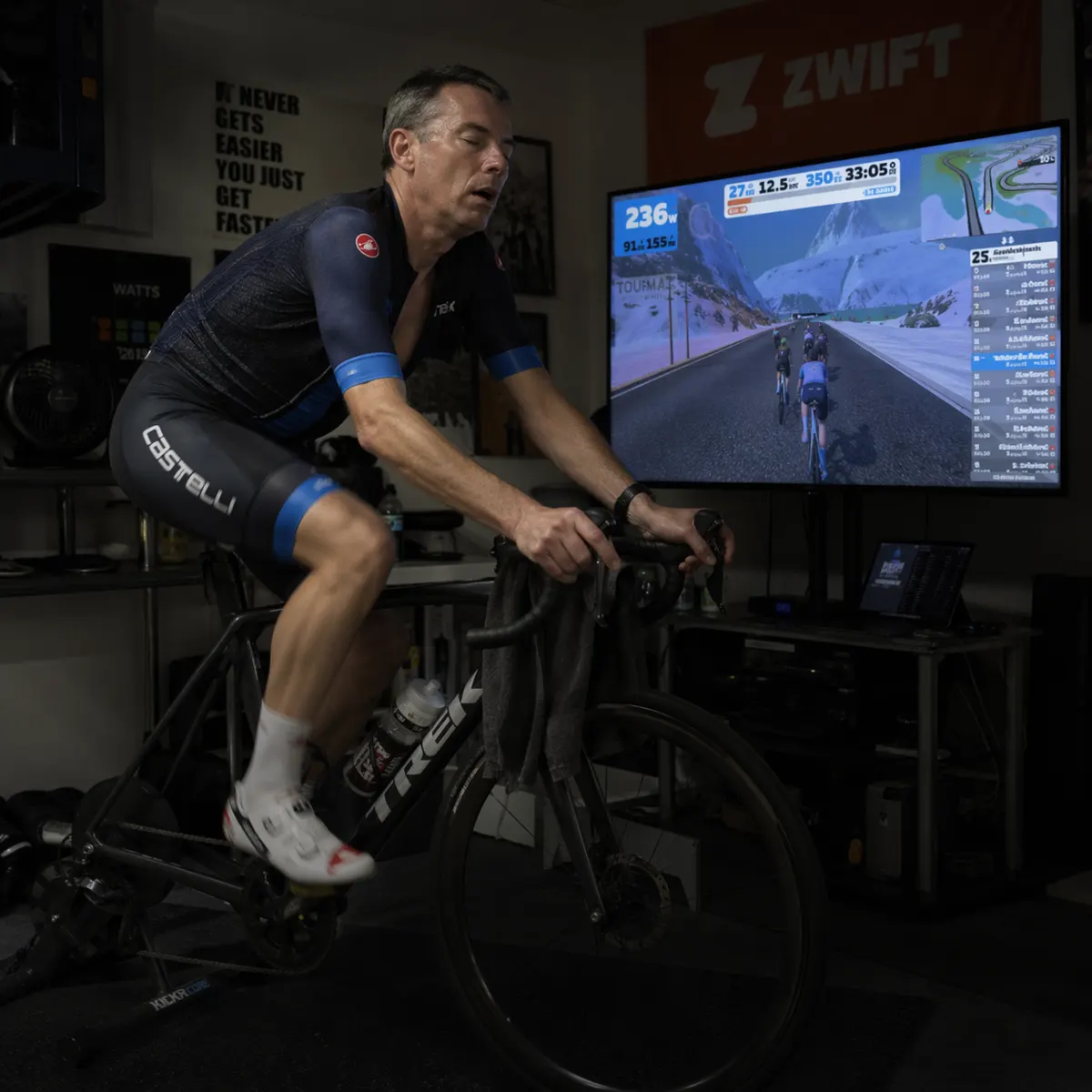
Most cyclists treat sleep like leftover time. Whatever is left after the training, the commute, the family stuff, and the screen scroll. And then they wonder why the legs aren't there on Saturday.
Here is why that is a bigger deal than you think.
A 2025 meta-analysis in Frontiers in Physiology pulled together 45 studies on what sleep deprivation actually does to athletic performance. Not just "you feel tired." Measurable, quantifiable damage.
And the findings should change how you think about recovery.
1. Your aerobic engine takes the biggest hit.
Of all the performance domains tested, aerobic endurance was one of the hardest hit by sleep loss, with an effect size of -0.76. That is a meaningful decline. Not a rounding error. Not something you push through with caffeine. Your ability to sustain effort over time, the thing that matters most in cycling, is the thing that suffers most when you cut sleep short.
2. Everything feels harder before it actually gets harder.
Perceived exertion (RPE) increased with an effect size of 0.51. That means the same watts, the same climb, the same interval feels significantly harder when you are under-slept. Your legs might still have the capacity, but your brain is already pulling the handbrake. You slow down not because you have to, but because your body is telling you it is worse than it really is.
3. Partial sleep loss is worse than you think.
Here is the part that should matter most to busy riders. It is not just total sleep deprivation that causes problems. Partial sleep deprivation, the kind where you get five or six hours instead of seven or eight, disproportionately affects explosive power, maximal strength, speed, and RPE. That is the exact pattern most time-capped cyclists live in. Not pulling all-nighters. Just consistently shaving an hour or two off sleep to fit training in.
What to do with this
If you race or do hard group rides: Your ability to respond to surges, cover attacks, and stay switched on in the final hour depends on both aerobic capacity and accurate effort perception. Chronically short sleep degrades both. Prioritise sleep in the 48 hours before your key event more than you prioritise that last opener session.
If you train big hours: Volume demands recovery. The more you ride, the more sleep you need, not less. If you are doing 12 to 15 hours a week on six hours of sleep, you are likely building fatigue faster than you are building fitness. The work is not the problem. The recovery is.
If you are time-capped: This is where it gets uncomfortable. If you are waking at 5am to get a session in, and that means you slept from 11pm to 4:45am, you are probably losing more fitness from the sleep debt than you are gaining from the session. On some days, sleeping in is the better training decision.
Bottom line: Sleep is not passive recovery. It is where the adaptation actually happens. If you are cutting it short to train more, you are likely going backwards.
Reference: Gong et al. (2025). Effects of sleep deprivation on sports performance and perceived exertion in athletes and non-athletes: a systematic review and meta-analysis. Frontiers in Physiology, 16, 1544286.
On my mindIt's OK to be not OK
I had a call this week with a rider who had a rough day.
They had a race. Narrow course, cobblestones, huge field. And something just got in their head. Their skills were off. The positioning was off. It did not flow the way it normally does, and the result showed it.
Now, this rider is not a beginner. They know what they are doing out there. But sometimes a course, or a situation, or just a moment of hesitation gets under your skin, and everything compounds from there.
What I told them was pretty simple. Note it, and move on.
Not "forget about it." Not "it doesn't matter." It does matter. A bad race stings. You replay it. You think about what you should have done, where you should have been, how it should have gone.
And honestly, it is okay to sit with that for a few days. We are not professionals. We are not rolling into another race the next morning where we need to be sharp again immediately. There is no team car following us to the next stage.
So let it breathe. Feel annoyed. Feel disappointed.
But do not let it become more than a few days. That is the line.
Because once it stretches past that, it stops being a useful reflection and starts becoming a story you tell yourself. And those stories have a way of showing up at the next start line, whispering in your ear right when you need to be committed.
The riders who improve the fastest are not the ones who never have bad days. They are the ones who process them quickly, take the lesson, and let the rest go.
Note it. Learn from it. Move on.
Damian
Get the Digest free, every Sunday.
One short, useful email a week: the studies, the experiments, and the patterns I’m seeing across 20,000+ training files.