
Cycling Science Digest ·
The more you train, the fewer heartbeats you use.
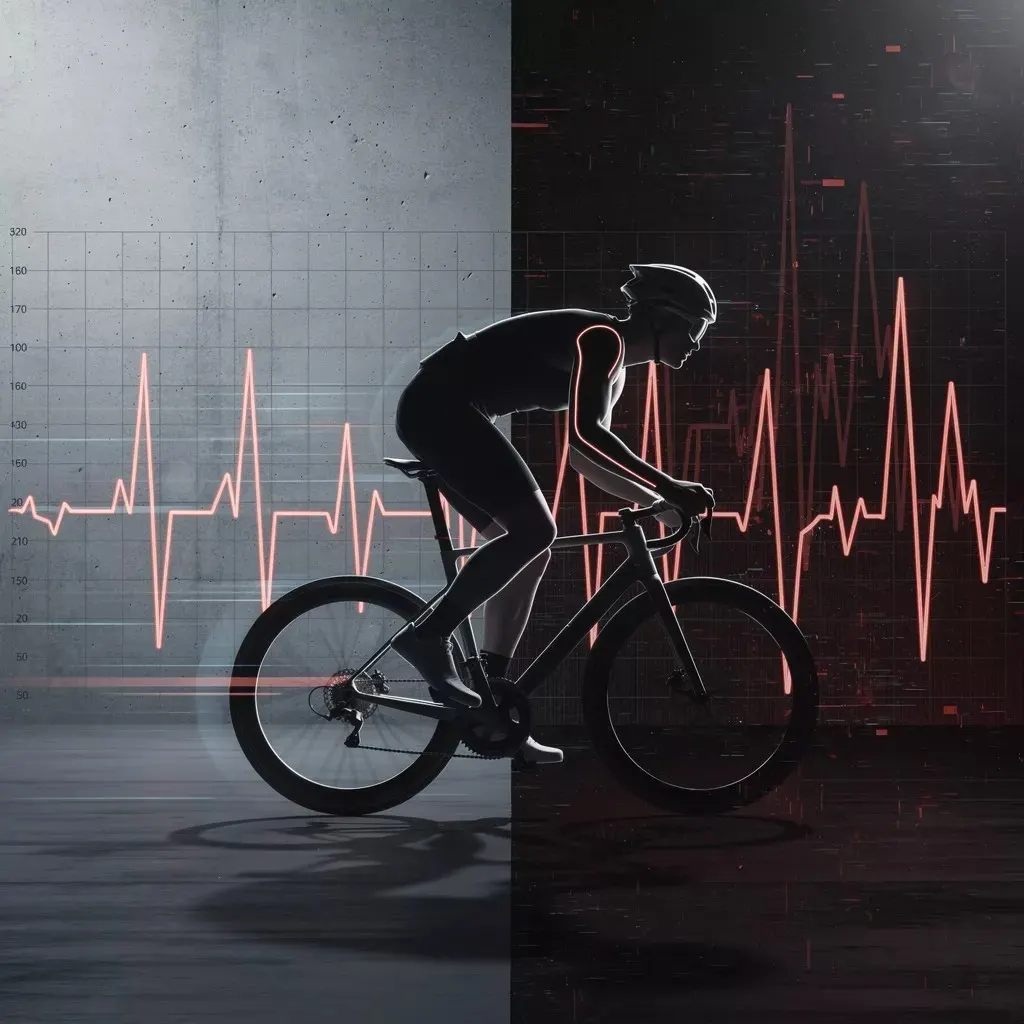
A new paper analysed 24-hour Holter data from 147 people, comparing elite endurance athletes with healthy controls. The athletes had a much lower average daily heart rate, almost entirely due to lower resting HR. That added up to about 11,500 fewer heartbeats per day.
To test what happens under extreme load, the authors examined heart rate data from riders in the 2023 Tour de France and Tour de France Femmes. Each stage cost about 35,000 heartbeats, far more than what athletes save through daily bradycardia.
The context here matters. This is one of the first attempts to quantify “heartbeat consumption” as a simple load metric across a full day, not just during training. It reframes heart rate as a 24-hour stress profile rather than a workout-only signal.
For riders juggling work, family, and training, the message is clear.
Normal endurance training reduces your overall cardiovascular load across the day. Only extreme, prolonged efforts push the system into a net-positive stress state.
A rising resting HR across consecutive days is not just fatigue. It’s a sign that life load is exceeding your recovery window, even if training looks “reasonable” on paper.
Tracking resting HR gives you an early-warning signal that is far more reliable than mood, motivation, or single-session power numbers.
Source: https://www.jacc.org/doi/10.10...
On my mindChasing Perfect Form
There was a time when I obsessed over clean pedalling technique. Every circle had to look smooth, every cue had to be precise. I thought if I could fix someone’s form, I could fix their performance.
But the longer I coach, the more I see how little perfect form matters once the real world shows up. Fatigue, road surface, group dynamics, weather, pressure. No one pedals like a textbook when it counts, and the riders who try usually waste more energy trying to look right than going fast.
What actually changes riders is load, consistency, and knowing how to apply force when they’re tired. Technique improves as a byproduct of training, not as the centrepiece.
I don’t chase perfect form anymore. I chase the moments where an athlete does something a little better under fatigue. That’s the real signal. The rest settles itself.
Damian
Get the Digest free, every Sunday.
One short, useful email a week: the studies, the experiments, and the patterns I’m seeing across 20,000+ training files.