
Cycling Science Digest ·
Why Your Cycling Power Data Might Be Misleading
Power Meter Accuracy: What Every Cyclist Needs to Know
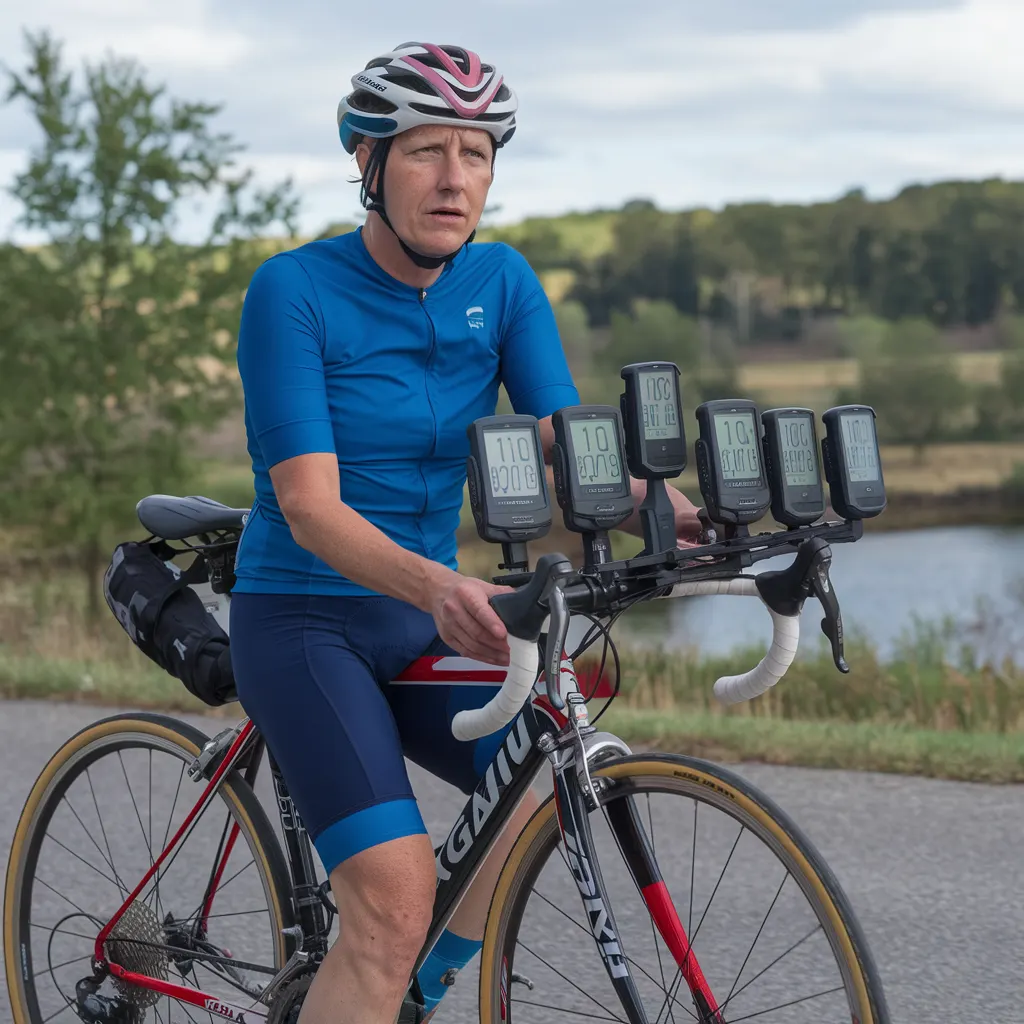
Recent research highlights how the device recording your power and cadence data can affect accuracy, especially during intense efforts. While most cycle computers perform similarly under steady, controlled loads, differences become noticeable in high-intensity, short-duration efforts like sprints.
Key Findings:
- Constant Efforts: For steady rides, power and cadence measurements across devices are almost identical. Differences are minimal, around 1–3 watts, and unlikely to impact training decisions.
- High-Intensity Efforts: During sprints or self-paced max efforts, discrepancies grow. Some devices showed variations of over 100 watts in average power or missed peak readings entirely. For cadence, differences of up to 7–8 rpm were recorded.
- Why It Matters: Inconsistent data can mislead your training and performance analysis, particularly for competitive cyclists where every watt and second counts.
The study tested the following 11 Garmin devices for power and cadence data accuracy:
Ranking and Observations:
- Wattbike Atom X (Control Device):
- Considered the benchmark for accuracy. Minimal discrepancies in steady-state and intense efforts.
- Edge 1030, Edge 830 (both units), Edge 530 (both units):
- Performed closely to the Wattbike in both power and cadence during constant efforts but showed minor variability in short, high-intensity efforts.
- Edge 820, Edge 810:
- Similar accuracy to the above group but had occasional minor discrepancies in power during peak efforts.
- Edge 1000:
- Notable issues during high-intensity efforts, with recorded power values sometimes 20–75 watts lower than the benchmark.
- Edge 520:
- Slightly less accurate compared to other Edge models, particularly in cadence during all-out efforts.
- Forerunner 735XT:
- The least reliable. Showed significant discrepancies in both power (up to 13.5 watts lower) and cadence (up to 8 rpm difference) during high-intensity efforts.
Recommendations:
Stick to One Device: Always pair the same power meter with the same cycle computer to ensure consistent data.
Be Cautious with Short Efforts: For sprints or short intervals, verify data reliability by comparing across sessions.
Choose Quality Gear: Not all devices handle rapid power changes equally. Invest in trusted brands and test their reliability.
Read more: https://www.mdpi.com/1424-8220...
On my mind
What’s the best outcome I could create by taking this leap?
Fear often paralyses us by focusing on everything that could go wrong. Instead, shifting your mindset to ask about the rewards of action transforms fear into opportunity. This simple reframe allows you to focus on growth, potential success, and the amazing possibilities waiting on the other side of risk.
Facing challenges with this perspective neutralises self-doubt and empowers you to take action, even when it feels uncomfortable. Every leap forward is a chance to grow stronger, build resilience, and create outcomes you once thought impossible. The best opportunities come when you dare to step outside your comfort zone.
Damian
Get the Digest free, every Sunday.
One short, useful email a week: the studies, the experiments, and the patterns I’m seeing across 20,000+ training files.