
Cycling Science Digest ·
Your body knows the plan better than your plan does.
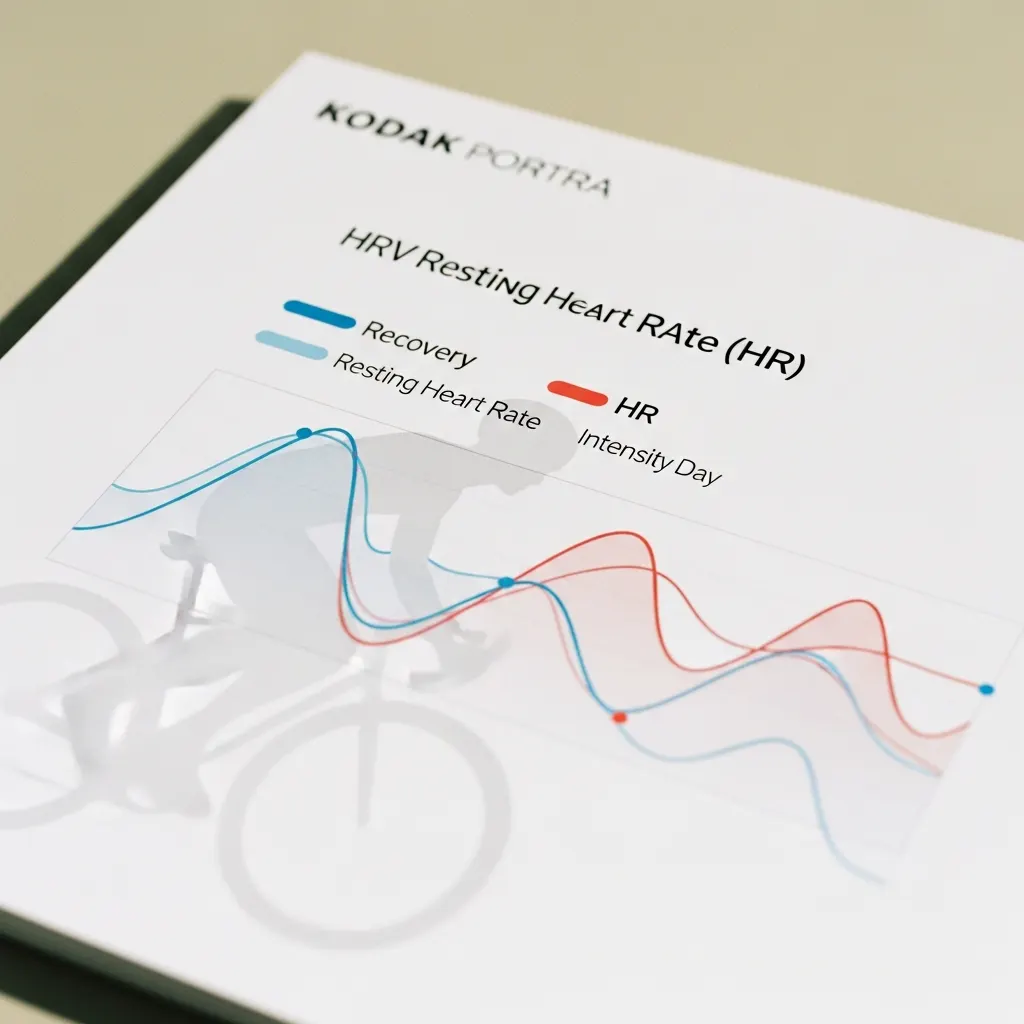
A recent study tracked experienced cyclists for 40 days to compare fixed training schedules with training adjusted daily using HRV, resting HR, and subjective well-being. Riders in the “recovery-guided” group improved across 1-min, 5-min, 20-min power and FTP, while those on fixed schedules saw smaller, inconsistent gains.
The context is important: these were trained cyclists, not beginners, and the intervention wasn’t special intervals or higher volume. The only difference was when harder sessions were done. The body’s daily readiness dictated the load.
For riders with real-life stressors, this is the strongest evidence yet that biological readiness creates more consistent progress than rigid plans.
- If HRV and resting HR trend down for 2–3 days, shift intensity.
- Hard sessions placed on “green” days produce better gains with less cost.
- For mid-life riders, well-being scores often predict performance more accurately than yesterday’s power file.
- The win isn’t avoiding work; it’s applying it when your system can use it.
Source: https://www.nature.com/article...
On my mindReading the Signals
I used to think consistency only meant never missing workouts. Now I see it differently. Real consistency is matching the work to the state you’re in. When riders push through low-readiness days, they get through the session… but they don’t get the adaptation.
The best progress comes when you nudge the plan, not force it. Each time an athlete honours a low-readiness signal, they avoid the slow decay that stops so many mid-life riders from ever stringing together a clean block. It’s not soft. It’s strategic.
Damian
Get the Digest free, every Sunday.
One short, useful email a week: the studies, the experiments, and the patterns I’m seeing across 20,000+ training files.