
Cycling Science Digest ·
Your FTP Isn't Enough: What Your Heart Rate Dynamics Reveal
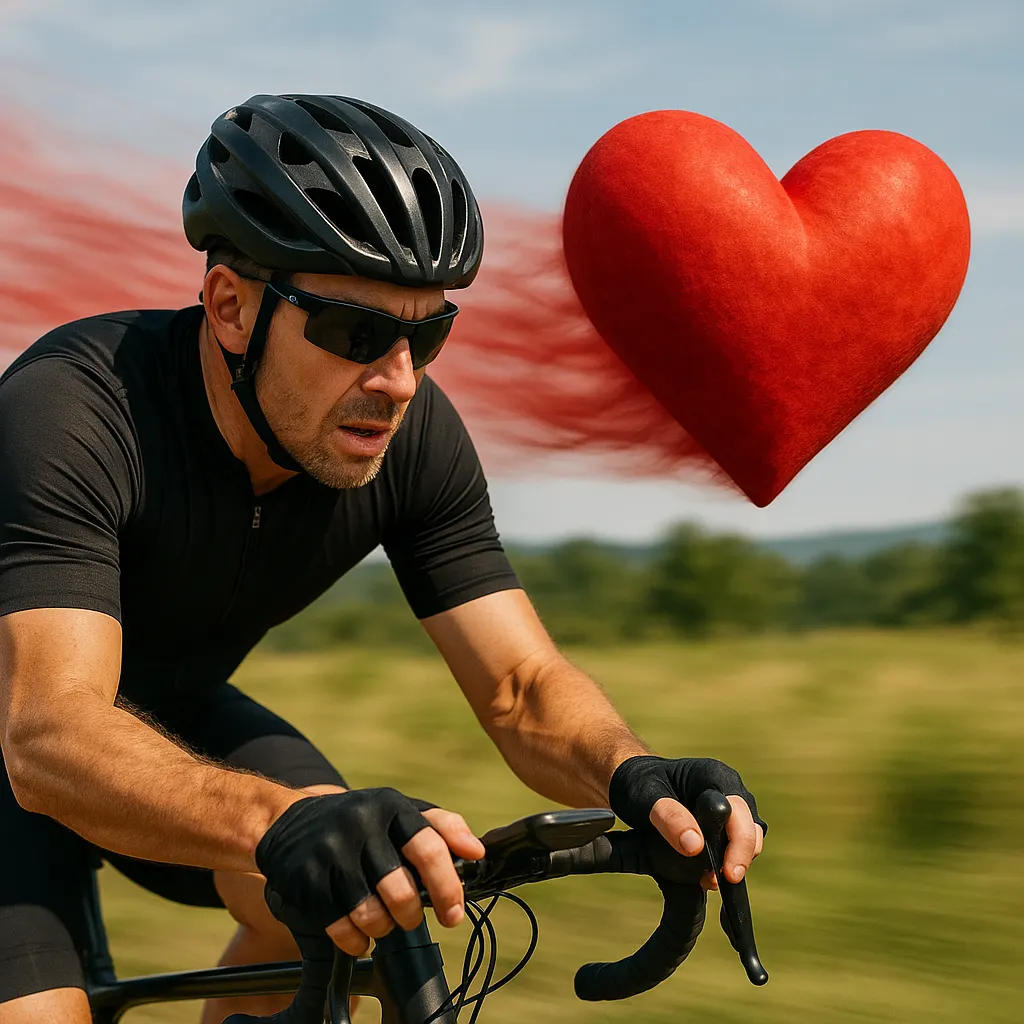
We all rely heavily on power numbers, but a new method suggests your heart rate dynamics might tell you more about your race-readiness than your FTP alone.
Researchers from Miguel Hernandez University have introduced an advanced analysis of heart rate dynamics paired with power output, revealing hidden markers of fitness in elite cyclists.
Key Findings:
- Top performers (Top 10 finishers) show significantly faster heart rate increases and more responsive heart rate modulation early in races compared to lower-ranked cyclists (positions 11–30).
- These athletes quickly accelerate and decelerate their heart rates in response to changes in effort, reflecting superior cardiovascular fitness and readiness.
- The difference is most pronounced in the first and third quarters of a race, highlighting the importance of cardiovascular responsiveness during strategic surges.
How It’s Measured:
- The study used a precise analysis method involving time-series data from power meters and heart rate monitors. Researchers looked specifically at how rapidly the cyclists’ heart rates increased and decreased relative to power output, using sophisticated statistical modeling techniques to quantify these dynamics.
Is It Accessible to Everyday Cyclists?
- While the advanced statistical methods of the study are complex, everyday cyclists can still gain insights by simply observing how quickly their heart rate responds to effort changes. Modern cycling computers and apps make it relatively easy to track these changes during and after workouts.
Why It Matters:
- Traditional metrics like average heart rate or FTP fail to capture the dynamic cardiovascular responsiveness that sets elite cyclists apart.
- Faster heart rate adjustments mean quicker recovery from intense efforts and better overall race management.
Practical Tips for Your Training:
- Monitor Your Responsiveness: Regularly check how quickly your heart rate rises going into intervals and how swiftly it recovers coming out of them—specifically observing the first minute of effort and the first minute of recovery.
- Compare Over Time: Track your heart rate increase and decrease rates over weeks and months to assess improvements in cardiovascular fitness.
- Adapt Your Race Strategy: Recognise the importance of quick cardiovascular responses during critical race moments, especially early on and in decisive segments.
Ultimately, this research encourages us to move beyond FTP as the sole fitness indicator and consider heart rate dynamics as a crucial factor in cycling performance.
Reference:
Mateo-March, M., Javaloyes, A., Peña-González, I., & Moya-Ramon, M. (2025). Methodological approach to assess cardiovascular dynamics in elite cyclists. MethodsX, 15, 103515.
On my mindThe Underrated Fuel
I consistently underestimate the power of having something to look forward to.
I realised this (again) recently, thinking about the buzz I get from a big ride or event on the calendar. It’s not just motivation it’s the quiet excitement that shapes my choices, lifts my mood, and adds momentum to every training session.
We talk so much about goals, targets, and metrics. But sometimes, it’s simply having something exciting on the horison that keeps us pedalling forward.
What’s on your calendar right now that’s pulling you forward?
Damian
Get the Digest free, every Sunday.
One short, useful email a week: the studies, the experiments, and the patterns I’m seeing across 20,000+ training files.