
Cycling Science Digest ·
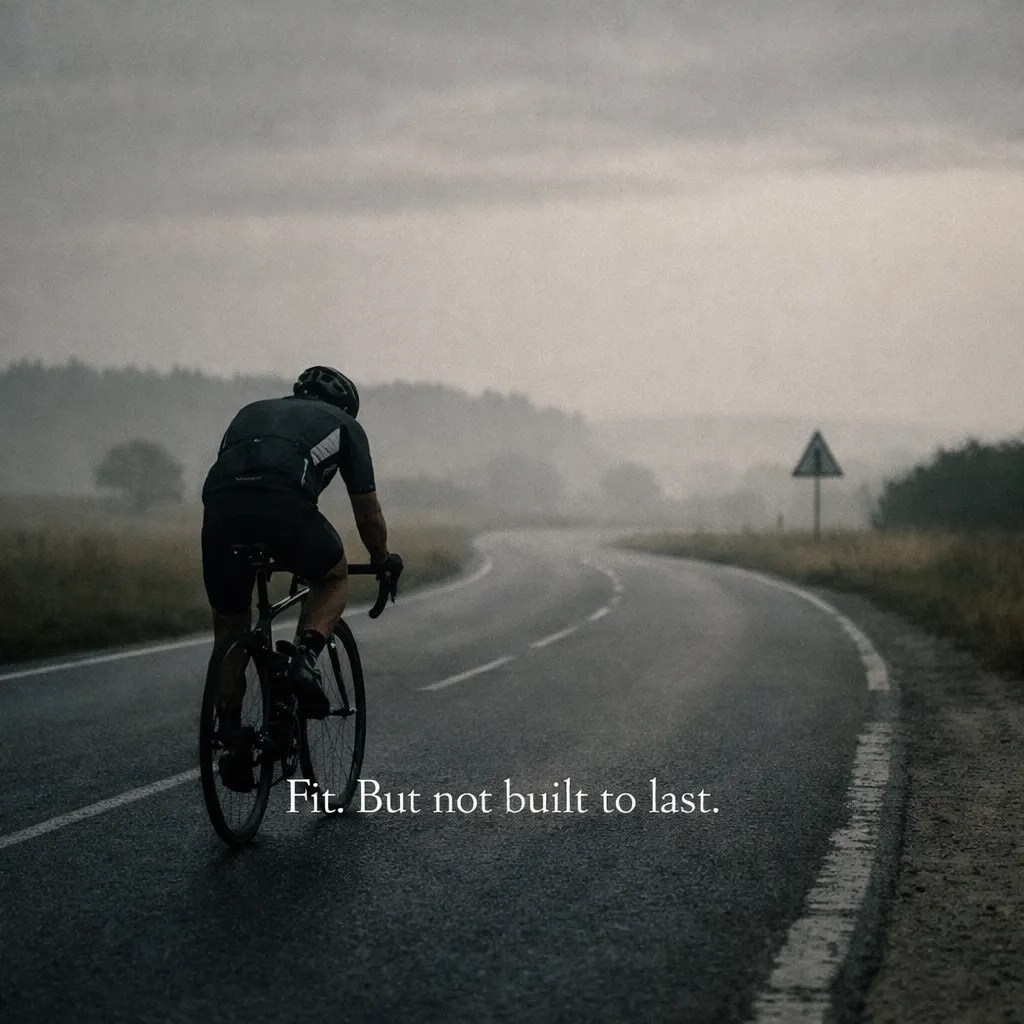
You’re fit. Your training just isn’t built to last.
A mistake fit riders keep making
Most riders I work with aren’t undertrained.
They’re consistent.
They do the hard work.
Their numbers look right.
And they still fade late.
When that happens, the reflex is always the same.
I need more intensity.
That’s almost never true.
A recent paper by Fernandez and Seiler put language around something I’ve seen for years.
There’s a layer of work that sits below training, but above rest.
Not recovery.
Preparation.
Low-stress, frequent movement that doesn’t build fitness directly, but lowers the cost of riding later.
Most experienced riders skip this layer.
Not because they’re lazy.
Because they’re serious.
The issue isn’t effort. It’s structure.
Durability doesn’t come from adding stress.
It comes from making stress cheaper to tolerate.
That’s why riders can be fit and still fall apart.
What I’d actually change
Stop asking where you can train harder.
Start asking where you can move more often without consequences.
Short easy rides.
Easy days that stay easy.
Sessions that don’t need to prove anything.
That’s not backing off.
That’s building something that lasts.
My position
Fitness creates capacity.
Durability decides whether it survives contact with fatigue.
Most riders don’t need more fitness.
They need training that holds up.
Reference
Fernandez, M. & Seiler, S. (2025).
Bridging the activation gap: a physical activity intensity scale informed by elite athletes yet inclusive for musculoskeletal pain patients.
Frontiers in Sports and Active Living, 7:1641818.
DOI: 10.3389/fspor.2025.1641818
On my mindA small moment this week
I met a new athlete face to face this week.
What stood out wasn’t their fitness or their goals. It was the feeling in the room. That mix of expectation and quiet hope that comes when someone decides to change something that’s been sitting unresolved for a long time.
For most of us, those moments don’t come often. Maybe every few years. When you commit to something that you know will challenge your current way of doing things, not just add to it.
What really struck me was this: the relief that comes when you stop holding everything in your head.
When you set a goal, choose a path, and then let go of the constant planning and second-guessing. The cognitive load drops. The focus shifts. The work becomes simpler, even if it isn’t easier.
That’s usually where real progress starts. Not in the big decisions, but in the daily execution once the decision has already been made.
I was reminded of all of that from a single conversation with a new athlete.
Damian
Get the Digest free, every Sunday.
One short, useful email a week: the studies, the experiments, and the patterns I’m seeing across 20,000+ training files.