
Cycling Science Digest ·
68% of recreational cyclists had abnormal heart rhythms in this study
Listen to this issue as a podcast
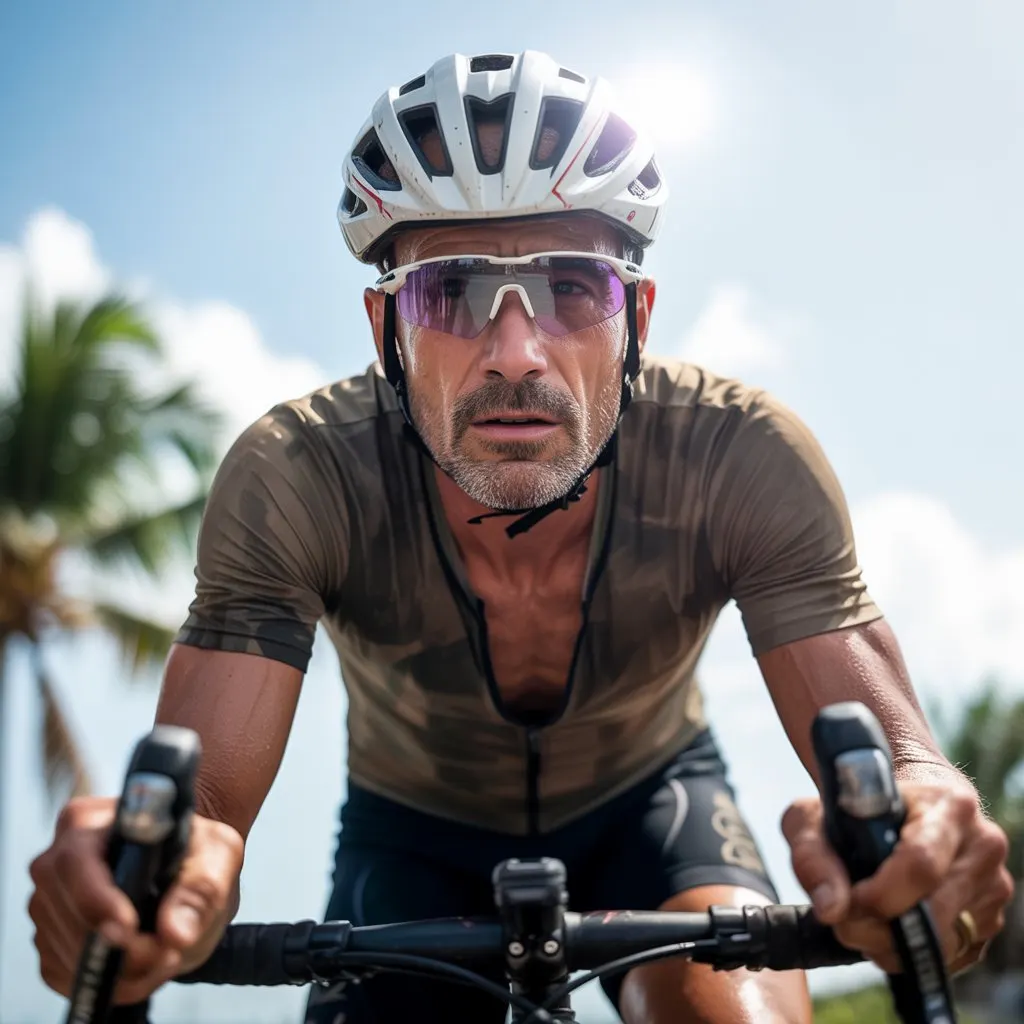
68% of recreational cyclists showed abnormal heart rhythms. Here is what that actually means.
Most of us assume that if we ride regularly, eat reasonably well, and feel fine on the bike, our hearts are in good shape. That is a fair assumption. It is also, according to a recent study, an incomplete one.
A research team from La Trobe University in Australia (Wundersitz, Collins, Gordon et al.) recruited 34 recreational cyclists with a median of 12 years of riding experience. Not professionals. Not elite athletes. Regular riders who love the sport and have been doing it for a long time. People like you and me.
They wore 5-lead Holter monitors (continuous heart rhythm recorders) for four days before a long ride, on the day of the ride itself (up to six hours at roughly 80% of heart rate reserve), and for four days afterwards.
The results landed in the Journal of the American Heart Association. And they are worth paying attention to.
Three things worth knowing:
1. 68% of the riders displayed abnormal cardiac arrhythmias. That is not a typo. More than two thirds of otherwise healthy, experienced recreational cyclists showed abnormal heart rhythms at some point during the monitoring period. Most of these were not dangerous in isolation, but the fact that they were so common is worth sitting with.
2. The risk spiked on the day of the long ride, especially for ventricular arrhythmias. The proportion of cyclists with abnormal ventricular arrhythmias was significantly higher on the exercise day compared with both the days before and the day after. In plain terms: the hard ride itself was the trigger. Your heart is under the most electrical stress when you are pushing it the hardest for the longest.
3. Pre-existing arrhythmia patterns amplified the risk dramatically. Riders who already showed arrhythmias on three or more days before the ride had a relative risk of 5.0 for abnormal cardiac arrhythmia on the exercise day. Five times the risk. If your heart is already showing irregular patterns at rest, a six-hour ride at 80% is not a neutral event. Age was also independently associated with exercise-day arrhythmia.
What to do with this
This is not a reason to stop riding. Exercise remains one of the most protective things you can do for your heart. But this study makes a strong case for knowing your baseline, not assuming it.
If you are over 40 and training seriously: consider getting a cardiac screening that goes beyond a standard GP check. Ask about an ECG or Holter monitoring, especially if you have family history, have noticed unusual heart rate behaviour, or regularly do long, high-intensity rides. This is not about fear. It is about information.
If you train with a heart rate monitor: pay attention to what it tells you beyond just zones. Erratic readings, unexplained spikes, or patterns that do not match your perceived effort are worth noting, not ignoring. They are not always just sensor glitches.
If you have had a scare or a family history: you are not alone, and you are not being dramatic for taking it seriously. Getting checked out is not weakness. It is the smartest training decision you can make. The study showed that pre-existing arrhythmia patterns are the strongest predictor of exercise-day risk. Knowing where you stand changes how you manage intensity, volume, and recovery.
Bottom line: Being fit and being cardiac-safe are not the same thing. The fittest thing you can do is actually know what is going on inside your chest.
Reference: Wundersitz, D.W.T., Collins, B.E.G., Gordon, B.A. et al. (2025). "Time Course of Cardiac Arrhythmia Following High-Volume Exercise in Recreational Cyclists." Journal of the American Heart Association.
On my mindThe Right Way
I had a coaching call this week that stuck with me.
A guy in his early fifties. Recreational cyclist. Does gran fondos, loves the local group ride, trains on Zwift through the week. The kind of rider who follows a plan, shows up, does the work. Not chasing podiums. Just wants to do well and know he gave it a proper crack.
Last year at a race, his heart rate spiked to 229. Averaged 212 for the effort. He had been sick leading in, did not feel right, but lined up anyway. Because that is what we do, right? Push through. She'll be right.
After the event he got checked out. Structurally fine, thankfully. But his mum passed away from heart problems. His dad had valve surgery. Family history is real. And now he is sitting at 53 wondering how to keep doing the thing he loves without ignoring the signals his body is sending.
Here is what got me. He said something along the lines of, "Your videos felt like you were staring me in the face." He was talking about the heart content on the new channel. The stuff I have been putting out for riders over 50.
And it reminded me of why I started that channel in the first place.
It was not because I thought the world needed another cycling YouTube channel. It was because I kept having conversations like this one. Riders who love the sport, still have fire, still want to compete at their level, but are navigating real stuff. Cardiac history. Ageing bodies. The tension between ambition and reality.
What I have noticed, more and more, is a generational shift happening. It used to be that blokes in their fifties might buy a nice bike and cruise around. Now they are buying the bike and the coaching. They are giving themselves permission to actually go after it. Not recklessly. Not pretending they are 25. But properly. With structure, with intent, with someone watching the numbers so they do not have to guess.
That is what the new channel is about. Permission with guardrails. You can still chase performance. You can still want more from yourself. But you do it inside reality, not despite it. You respect intensity. You get your zones locked in. You stop guessing and start measuring. And when something feels off, you do not just push through. You pay attention.
This rider on the call is not broken. He does not need less ambition. He needs better structure around the ambition he already has. And I think that is true for a lot of you reading this as well.
The best thing he said was near the end: "I just want to look in the mirror and know I gave it everything I could, the right way."
That is the whole game right there.
Damian
Get the Digest free, every Sunday.
One short, useful email a week: the studies, the experiments, and the patterns I’m seeing across 20,000+ training files.