
Cycling Science Digest ·
555 cyclists were asked about strength training. The answers explain a lot.
The thing most cyclists skip (and the science says they shouldn't)
Listen to this issue as a podcast
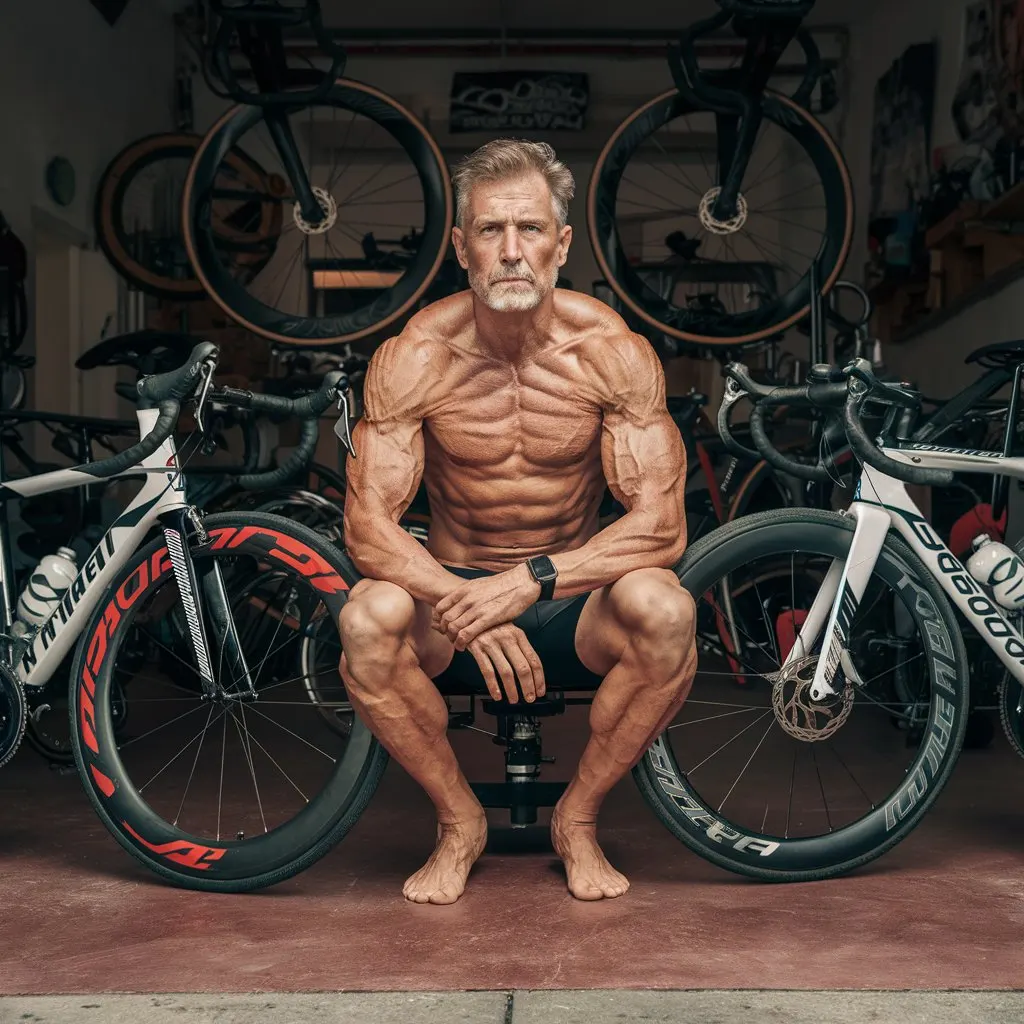
Here is something most cyclists over 40 already suspect but keep ignoring: you are losing muscle. Slowly. Quietly. And it is costing you more than you think.
A 2024 study published in the Journal of Functional Morphology and Kinesiology surveyed 555 male master cyclists aged 35 and above to find out what they actually do when it comes to strength training. The answers were revealing.
Most did some form of strength work in the off-season. But when the racing and riding season arrived, the majority dropped it. Frequency went down. Sessions disappeared. The reasons were predictable: not enough time, hard to stay motivated, and the belief that riding should take priority.
Sound familiar?
Here is where it gets interesting.
A separate 2025 meta-analysis published in the European Journal of Applied Physiology pulled together 17 studies and 262 cyclists to answer a simple question: does heavy strength training actually make you faster on the bike?
1. Yes. And not in the way most people expect.
Heavy strength training (at or above 80% of your one-rep max) improved cycling performance, cycling efficiency, and anaerobic power. But here is the part that matters: it did this without changing VO2max. Your aerobic engine stayed the same. You just used it better.
2. Efficiency is the mechanism, not fitness.
The effect size for cycling efficiency was significant (0.353, p = 0.012). For anaerobic power it was even larger (0.560, p = 0.024). And for overall cycling performance (time trials and time to exhaustion), 0.463 (p = 0.016). In plain language: riders got faster without getting fitter in the traditional sense. They got more out of what they already had.
3. Most master cyclists drop the weights exactly when they need them most.
The survey of 555 riders showed a clear pattern: strength work peaks in the off-season and falls away during race season. But the performance benefits of heavy lifting are most useful when you are racing and riding hard. Efficiency, power, and fatigue resistance all matter more under load, not less.
What to do with this
If you race or do hard group rides: Two heavy strength sessions per week is the most commonly studied dose. Squats, deadlifts, leg press. Keep the reps low (3 to 6), the load high, and the rest long. This is not circuit training. It is not HIIT in the gym. It is heavy, deliberate, neuromuscular work.
If you train big hours: You do not need to add volume in the gym. Two short sessions (30 to 40 minutes) built around compound lower-body lifts will do. The goal is not to be sore. The goal is to maintain force production and efficiency as the season goes on.
If you are time-capped: This is actually good news. Strength training is time-efficient. A focused 30-minute session twice a week costs you one hour total, and the evidence says it improves how effectively you use every watt you produce on the bike.
Bottom line: You do not need a bigger engine. You need to stop leaking power through an inefficient one. Heavy strength training is one of the few things that improves cycling performance without requiring more time on the bike. And most of us drop it at exactly the wrong time.
References: Vårvik, F.T. et al. (2025). Heavy strength training effects on physiological determinants of endurance cyclist performance: a systematic review with meta-analysis. European Journal of Applied Physiology. Tomczak, M. et al. (2024). Strength Training Among Male Master Cyclists: Practices, Challenges, and Rationales. Journal of Functional Morphology and Kinesiology, 9(4), 232.
On my mind
An ode to the misunderstood.
I wrote something a little different this week.
No data. No coaching breakdown. Just something that came out one evening after a ride, and I figured it was worth sharing.
Because sometimes you do not need a study or a training tip. You just need to be reminded why you clip in.
This is an ode to the misunderstood.
The tight-pants, clip-clop crowd. Clipped-up helmets. Oversized sunnies. The search for something, but happy with nothing. Where the ride is enough, but you can never get enough.
The goals. The power. The speed. The seed that got planted alongside the need to feel the rhythm, the wind at your back, the sun on your face.
The smile. The grin. The let's-get-stuck-in to the local run. The type 2 fun.
The fitness you earn that no one can take from you. The burn in the legs. Then not being able to walk down the stairs.
The 5am club. The 6am and 9am club. The late-night and early-afternoon club. The done-before-work club. The done-after-work club. The squeeze-it-in-because-life-is-full club.
The dirt. The road. The in-between. The "I ride a gravel bike, so you know what I mean."
The fluoro because you want to be seen. Or the scene where you want to be seen.
And for the ones who get it, no explanation needed.
Keep doing what you're doing. Keep riding.
Damian
Get the Digest free, every Sunday.
One short, useful email a week: the studies, the experiments, and the patterns I’m seeing across 20,000+ training files.