
Cycling Science Digest ·
Continuous lactate monitoring -- The future of performance?
Are these the next big thing in cycling tech?

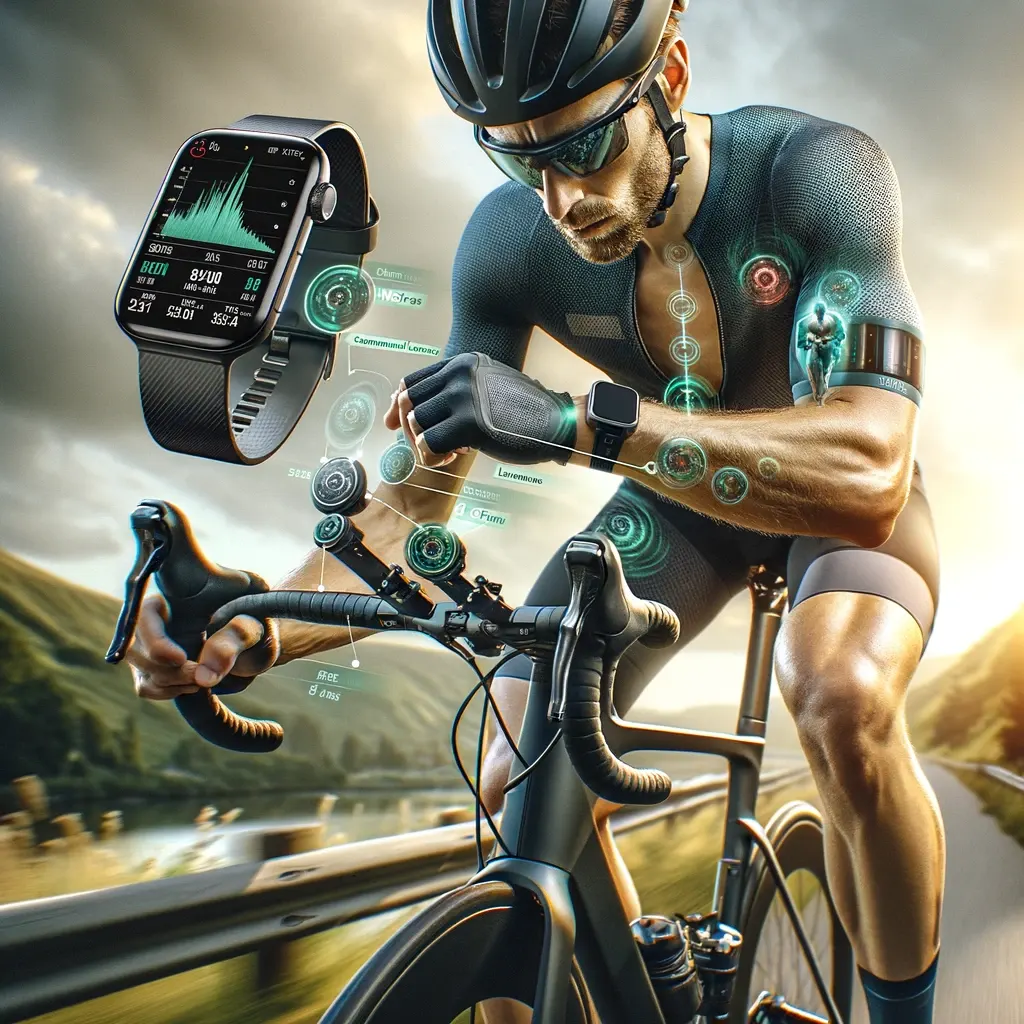
Continuous lactate monitors (CLMs) are wearable sensors that measure lactate concentrations in the body during exercise. They provide real-time data for adjustment to lactate levels on the fly.
Benefits of CLMs:
Continuous data stream for better trend detection.
Time-efficient and less interruptive compared to traditional blood sampling.
Why monitoring lactate during exercise is useful:
Determines anaerobic threshold (LT1).
Indicates acute fatigue or recovery.
Reflects the fuel source (fat vs. carbs) used during exercise.
Provides insights into muscle fibre type recruitment.
Practical uses of CLMs in training and racing:
Maintain LT1 intensity for long endurance training.
Implement the Norwegian Training Method with lactate monitoring.
Enhance interval training with lactate concentration markers.
Control lactate levels to optimise fat burning during exercise.
Continuous lactate monitor devices:
IDRO Continuous Lactate Patch: uses sweat analysis and plans to launch in April 2024.
K'Watch Continuous Lactate Watch: measures lactate via skin contact, available in 2024 for $199.
Abbott Lingo: Expected to launch lactate tracking in 2024, potentially a strong competitor.
In conclusion, CLMs have the potential to revolutionise real-time monitoring if you use lactate as a marker. But if you don't use it, continue on the same way you always have.
Sources:
On my mindPeriodisation
I've been obsessed with the idea that periodisation might not be the only and best way to train. It really challenges me but is part of the unravelling of most of my deeply ingrained beliefs in cycling training.
Everywhere I turn I am finding more and more unanswered questions when it comes to cycling science. And it has actually given me more freedom to experiment and try new things when there is no evidence to inform my choices.
I'm leaning a bit more into my own blend of empirical evidence with intuitive understanding to investigate new ways of doing things. It's fun and I am making a video right now that tests out a new way of progressing intervals.
Watch this space for some new ideas about training!
Damian
Get the Digest free, every Sunday.
One short, useful email a week: the studies, the experiments, and the patterns I’m seeing across 20,000+ training files.