
Cycling Science Digest ·
Fewer Gels, Same Power? Why ‘Eating Less’ Might Fuel You Better
Fewer Gels, Same Power?
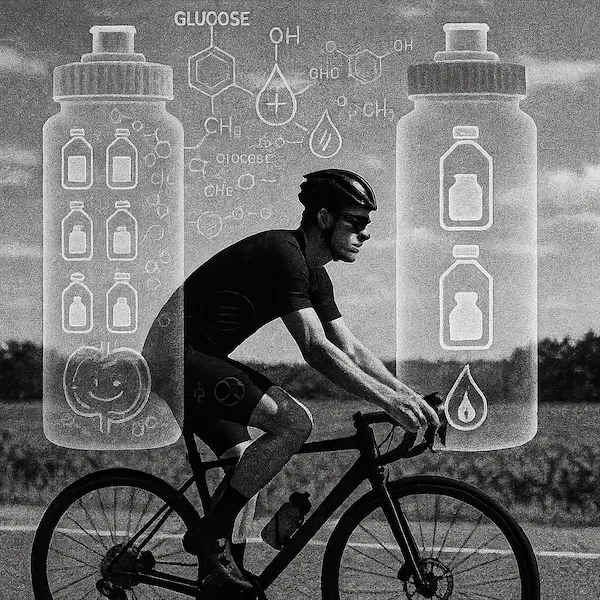
You know the drill: sports scientists tell us to cram down 90 g of carbs per hour, usually a gel every 15 minutes, to stay sharp in races. Yet many riders hate that routine. A new Liverpool John Moores University study asks a simple question: what if you swallowed the same total carbs but in bigger hits only every 30 minutes?
The researchers recruited twenty recreational cyclists, fed them a high‑carb diet, then put each rider through two identical three‑hour sessions at lactate‑threshold power followed by a ride‑to‑exhaustion. In one trial they took a 22.5 g glucose‑fructose gel every 15 minutes; in the other, a 45 g gel every 30 minutes. Both protocols delivered the recommended 90 g h⁻¹, with water standardised. Heart rate, oxygen use, blood glucose, fat and carb oxidation, plus gut comfort were tracked.
What happened? Physiological strain was identical. Blood sugar dipped for everyone in the first 15 minutes (breakfast hangover) but rebounded regardless of feeding pattern; the 15‑minute gels simply spiked it sooner. Carbohydrate oxidation sat around 2.3–2.4 g min⁻¹ in both trials. Interestingly, the 30‑minute pattern nudged fat oxidation slightly higher, hinting at marginal glycogen sparing. Gut scores stayed low; only one rider ever rated a symptom above three out of ten. When asked to ride until they cracked, riders lasted about nine minutes in either condition.
What this means for your next event
- Freedom of choice: 45 g every 30 minutes gives the same fuel delivery while letting you focus on tactics or technical terrain.
- Totals rule: keep intake near 90 g h⁻¹ (or your personalised ceiling) whatever schedule you choose.
- Start early: begin feeding within the first half‑hour to avoid the transient low after breakfast.
- Practise in training: tolerance is individual, so test bigger boluses before race day.
- Do not supersize: results support 45 g hits; much larger doses could still upset stomach or insulin balance until proven otherwise.
Reference:
https://onlinelibrary.wiley.co...
Ready to boost your durability?
Grab my Road Durability VO₂max Plan—a smart, structured approach to training that builds lasting performance.
On my mindProgress in the slow lane
Real progress unfolds at walking pace.
That acceptance felt like grief yet it freed me. I stretched warm-ups, respected recovery, and stopped adding reckless reps. I applauded boring wins: eight hours sleep, an extra bowl of rice, three flawless training weeks. Fitness returned quietly. Long climbs became conversations rather than battles.
My athletes mirror the pattern. When they stop sprinting after every horizon they discover patience fuels consistency and consistency compounds. The finish line is not running away. It waits until our legs, heart, and head are ready.
So breathe. Embrace the grind. Do today’s ride right. Tomorrow will thank you for the effort.
Damian
Get the Digest free, every Sunday.
One short, useful email a week: the studies, the experiments, and the patterns I’m seeing across 20,000+ training files.