
Cycling Science Digest ·
Keep Your Power: Tips to Stay Strong as You Age
Tips to Stay Strong as You Age
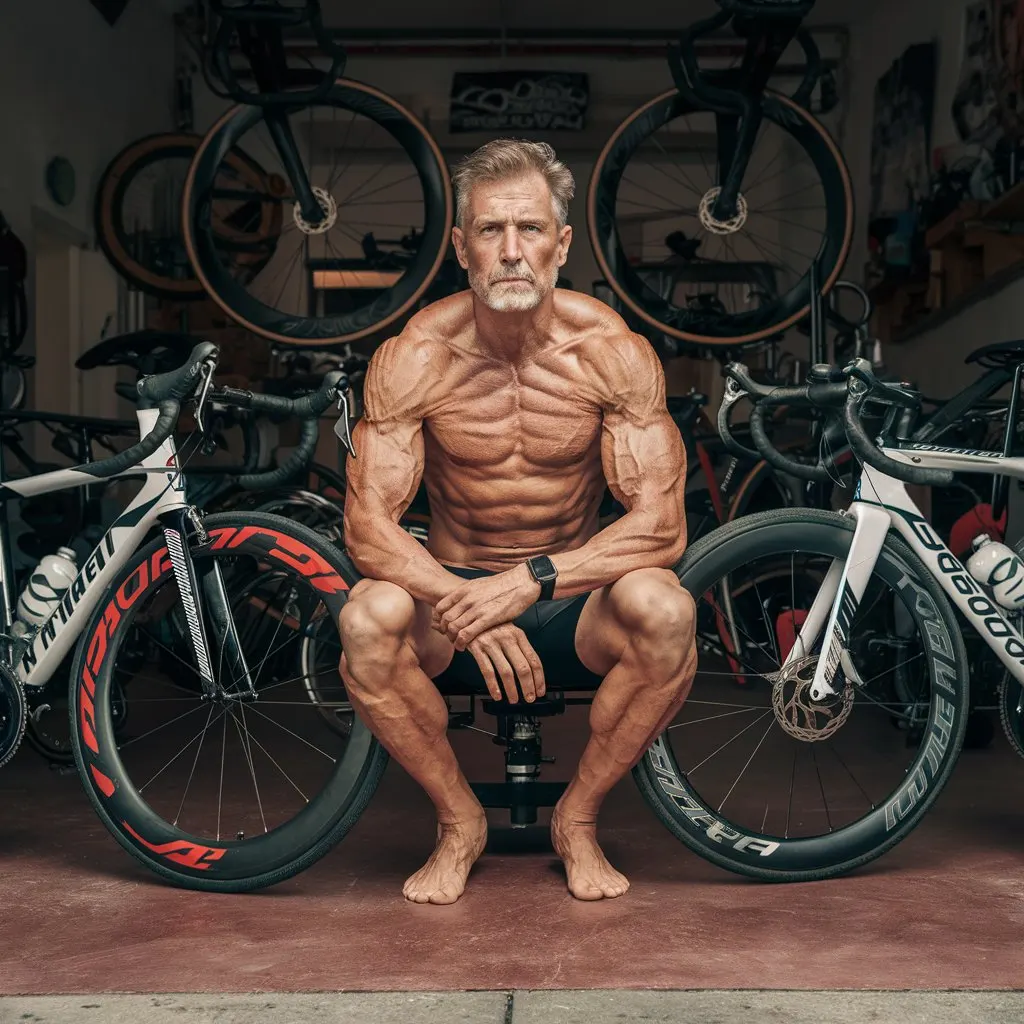
A recent study in the Journal of Applied Physiology highlights that muscle power—the ability to exert force quickly—declines more rapidly with age than muscle strength, affecting daily activities like climbing stairs or rising from a chair.
This decline is primarily due to changes within the muscles themselves, such as reduced tendon elasticity and a decrease in fast-twitch muscle fibres.
To counteract this, incorporating targeted training is essential. Engaging in exercises like hill sprints, plyometric jumps, or quick-paced resistance training can help maintain explosiveness.
Interestingly, focusing on lighter weights moved rapidly can be as effective as heavy lifting, reducing strain while preserving power.
Genetic factors also play a role; some individuals naturally have more fast-twitch fibres, influencing how they respond to explosive training. Starting such training earlier in life may offer lasting benefits to mobility and strength.
In summary, to maintain muscle power as you age, integrate explosive exercises into your routine, emphasising speed and intent over heavy loads.
For more details, refer to the study: https://journals.physiology.or...
Join TEAM SEMIPRO for $32 every 4 weeks
Gain access to 53 training plans, 307 structured workouts, TrainingPeaks Premium, and a one-time coach consultation to make every session count.
On my mindRiding the Long Game
In cycling, it’s easy to focus on the immediate gains—nailing that interval, pushing through the last climb, or logging big miles for the week. But there’s a method called “second-order thinking” that challenges us to see beyond the next pedal stroke and consider the bigger picture.
Second-order thinking asks us to play the long game, to think not just about today’s workout but about the months and years ahead. It’s about anticipating how today’s decisions might ripple through our performance over time.
Imagine it like a strategic game of chess. You’re not just looking at the next move but planning for how it shapes the entire race. You’re adapting based on potential outcomes, envisioning the long-term impact of each choice.
While first-order thinking drives us to chase immediate rewards, second-order thinking encourages us to ask, “And then what?”
It’s about choosing the enduring reward over the quick fix—building resilience, setting yourself up for consistent improvement, and riding toward lasting success.
Damian
Get the Digest free, every Sunday.
One short, useful email a week: the studies, the experiments, and the patterns I’m seeing across 20,000+ training files.