
Cycling Science Digest ·
Why Doing Nothing Might Be Your Secret Weapon
Train Hard, Recover Like a Monk
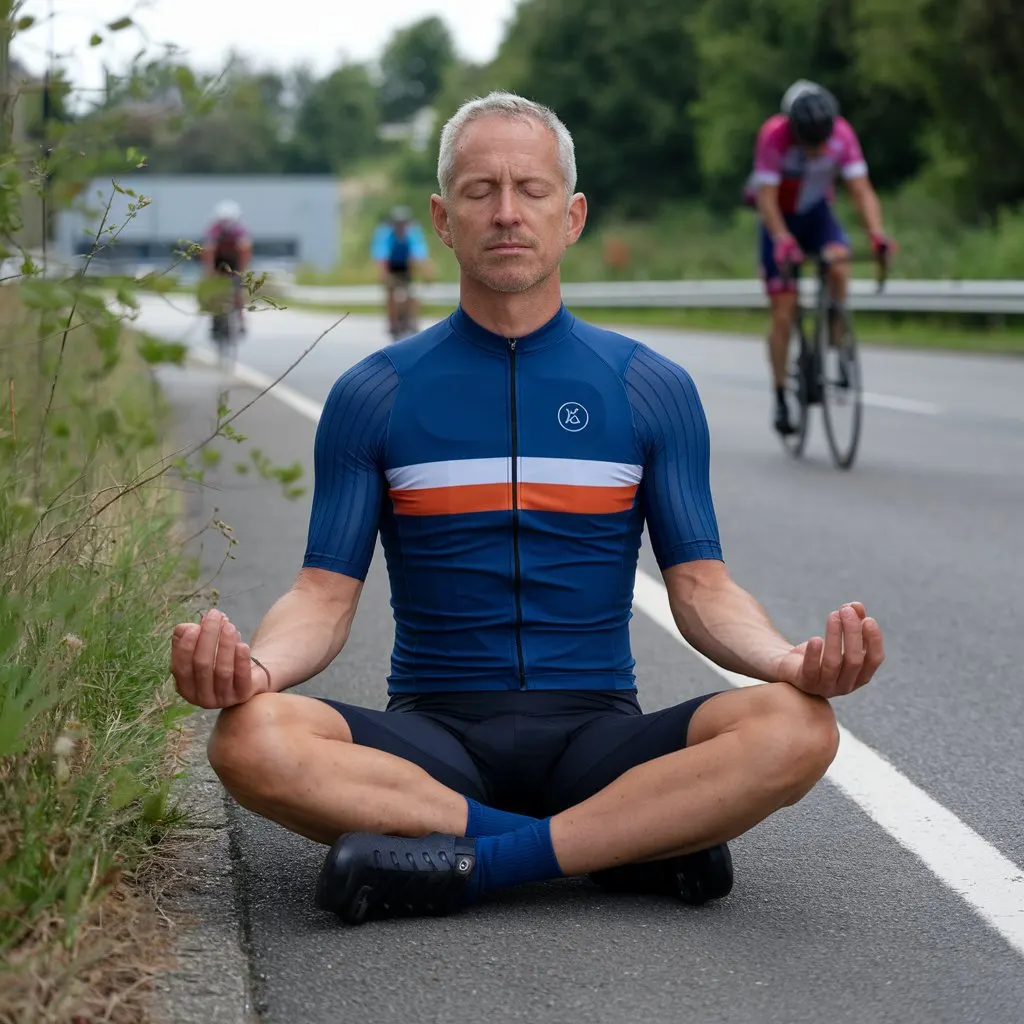
A 2024 study introduces deep rest—a distinct physiological state triggered by practices like meditation, breathwork, and prayer. It reduces stress at the cellular level and boosts recovery. This is not passive rest; it’s a deliberate reset of your stress systems that enhances recovery and long-term performance.
Key Takeaways
1. Nervous System Control
Contemplative practices increase parasympathetic activity and reduce sympathetic arousal. This shift improves HRV, digestion, hormone balance, and mental clarity—crucial for recovery and adaptation.
2. Cellular Energy Allocation
Chronic stress depletes mitochondrial energy, leaving less for repair and adaptation. Deep rest redirects energy toward mitochondrial function, DNA repair, and immune health—building long-term resilience.
3. The Missing Gear in Recovery
Most athletes overtrain arousal and undertrain recovery. Deliberate downshifting via deep rest methods can become a competitive advantage.
Practical Application
- Before rides: Use 3–5 minutes of nasal breathing to calm the nervous system.
- After rides: Do 10 minutes of breathwork or guided meditation to accelerate recovery.
- During rest weeks: Replace some low-value rest time (like screen time) with deep rest techniques.
- Track it: Monitor HRV or resting heart rate to identify when recovery strategies are working.
Bottom Line
Deep rest isn’t about doing less—it’s about recovering smarter. Build it into your system like you would intervals or nutrition.
Source
Crosswell et al. (2024)
https://pubmed.ncbi.nlm.nih.go...
**Train to Last, Ride with Purpose.**Build the durability to go faster, longer—and the structure to stop wasting time. TEAM SEMIPRO gives you a proven, organised system to train smart and finish stronger.👇🏼
https://www.semiprocycling.com...
On my mindAccept Change or Leave
“Every time you say you’ll do something but don’t do it, you solidify the idea in your mind that you’re a pretender… Your life will change quickly.”
This hit me hard because it puts into words a pattern I’ve seen in myself but haven’t fully acknowledged. Every time I skip out on something I said I’d do—whether it’s training, a work task, or even a small habit—I chip away at my own identity.
It’s not just about productivity; it’s about trust.
Not following through subtly reinforces the belief that I’m not who I say I am. That gap between intention and action grows, and with it, doubt and frustration. The quote challenges that directly: stop pretending. Fewer promises, more execution.
I’m realising the fix isn’t doing more, it’s doing what I say I’ll do—consistently. That’s where self-respect lives. And yes, life does start to change quickly when that shift happens.
Damian.
Get the Digest free, every Sunday.
One short, useful email a week: the studies, the experiments, and the patterns I’m seeing across 20,000+ training files.