How I coach cyclists.
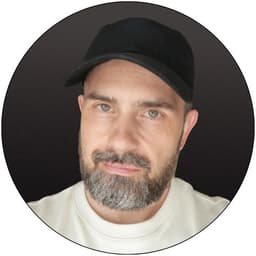
Written by Damian Ruse
Founder of SEMIPRO Cycling. Fourteen years coaching cyclists from beginners to the WorldTour.
Who I am, and what this is.
I've coached cyclists for fourteen years. Every level, from someone doing their first gran fondo all the way through to riders racing at the very top of the sport. A minimum roster of twenty athletes for fourteen straight years. Hundreds of riders when you count the turnover, thousands of training blocks behind me, and thousands of conversations about what's working and what isn't.
Over that time I built a system. Not a programme you download and follow. A system for thinking about training, for reading data, for making decisions. It's evolved over the whole fourteen years, and I've changed my mind on things. I've made mistakes. I've thrown things out. I've absorbed the research, argued with it, tested it, and kept the bits that actually hold up when you put them in front of a real person on a real bike.
This playbook is all of it. Everything I know about how to train a cyclist. I'm going to lay out the power concepts, the zone system I use and why, how I think about building a training year, which workouts earn their spot, and how to actually execute on event or race day. I'm going to show you what it looks like in practice with real athletes and real data. There's no shortcut through it, but by the end you'll have the complete picture of how I coach, and you can take whatever is useful and apply it yourself.
Who this is for.
This isn't a beginner's guide. If you're brand new to cycling, go ride. Fall in love with it. Come back when you've got some miles in your legs and some questions about how to get better.
This is built for two types of rider.
The first is the time-constrained cyclist. You've got a job, maybe a family, definitely a life that doesn't revolve around cycling. You're training somewhere between 5 and 10 hours a week, maybe less some weeks when things get busy. You own a power meter. You've probably followed a plan or two. You've done the reading. And you're at this point where you're thinking: I don't have more time to give, so I need to make the time I've got actually count. You can't just add more volume. You need to know that what you're doing is the right stuff, in the right order, for the right reasons.
The second is the masters rider. You're probably 40-plus, maybe 50-plus. You might actually have more time on the bike than the first group. Maybe the kids have left home, maybe you've structured your life around riding. Time isn't really your issue. Your issue is that your body doesn't respond the way it used to. Recovery takes longer. Things that worked five years ago don't work anymore. You're watching your numbers plateau or decline and you're wondering whether that's just aging or whether there's something you could be doing differently. And the answer, in most cases, is that there's a lot you could be doing differently, but not the stuff the internet is telling you, because almost none of it is written for someone your age with your physiology.
If you're either of those two people, this is for you. Everything in this course is built around the reality of training with limited time or a changing body, often both.
And if you're a coach, this is how I think about the job. You might disagree with parts of it. That's fine. But you'll know where I stand and why.
How I got here.
I should give you some context on where all of this comes from, because it didn't start with coaching. It started with racing.
I was a serious junior. Under-17 Australian time trial champion. I raced and represented Australia in mountain bike cross-country. And I came up through a system that was geared towards the Sydney 2000 Olympics, which meant resources got thrown at us that most juniors never see. We had coaching, sports psychology when it was still rare at the youth level, testing, massage, equipment, travel. We were part of studies. It was a proper high-performance pipeline, and I absorbed a lot from the coaches who ran it. Some of Australia's best, which at the time meant some of the world's best.
Then there was a gap. Life happened. And in my late twenties, early thirties, I came back to cycling, not as a rider this time, but with this question of whether coaching was something I wanted to build a career around.
And the first thing I did was pick up the phone and call my old coach, who by then was the national coach, and ask him to mentor me through it. That's where this started. Not from a textbook. From a phone call to someone I trusted, saying "I want to do what you do. Show me how."
From there, it was self-directed. I started the SEMIPRO Performance Podcast and asked the same question every week: how do we make riders better? I talked to professional coaches, sports scientists, anyone who'd give me their time. I read everything I could find. And I started coaching, at every level. Development riders. Masters athletes. Time-constrained riders with six hours a week.
I took one rider from his first pedal stroke all the way through to his first professional contract. I was his full-time coach in his first year as a pro, and I consulted on his programme in his second. I've never been employed directly by a team. I've always worked as an outside coach. But that outside seat has put me alongside performance teams during Grand Tours and World Championships campaigns, managing performance load, fatigue modelling, and pacing for riders at the very top of the sport. So when I say I've worked across every level, that includes the very top, just from the outside, never in the team car.
The whole way through, I was building a network of people I could go to for help when I hit something I didn't understand.
And here's the thing that matters about that path. I didn't come into this locked into one way of thinking. I wasn't a pro rider who just coached the way I was coached. I was asking the question fresh, for every single athlete: what does this person need to get better? And I was willing to try things. To experiment, respectfully, because a coach has many athletes and many careers, but an athlete only has one. But we tried things. We tested ideas. We threw out what didn't work and kept what did.
Some of what I've landed on is going to sound familiar. Some of it is going to challenge what you've been taught. I've got opinions on training zones that'll make some people uncomfortable. I think the most widely-used model of periodisation is built on science that doesn't hold up. And I've built my coaching around a concept that I think is the most underused idea in the sport (durability), which we'll get to.
I'm not saying I've got all the answers. But I've got a system, it's been pressure-tested across every level of the sport, and I'm going to share the whole thing.
What you're getting.
Three sections. First, the foundations: power, data, zones. Not the way you've probably learned them. I'm going to strip out the dogma and give you what actually matters. Second, the system: how I think about building training that responds to your body, not the calendar. The specific workouts, the execution skills, the framework underneath all of it. Third, the proof: real athletes, real data, real coaching decisions with the numbers on screen.
This is the what and the why. I'm giving away the entire playbook. Every concept, every framework, every principle I use. If you want to take it and run with it yourself, go for it. That's genuinely the intent.
What I can't give you here is the how, applied to your situation. Reading your specific data, making the right call for your specific body, adjusting in real time to your specific life. That's coaching. That's what I do for a living. But that's not what this is. This is everything you need to understand the game. What you do with it is up to you.
Let's get into it.
Right. That's enough preamble. Let's start with the thing that underpins everything else: power and data. What the numbers actually mean, where they're useful, and where they start lying to you.